

Case Study: Potential Effects of Circumferential Root Severance on the Physiological and Structural Condition of a Mature Spotted Gum
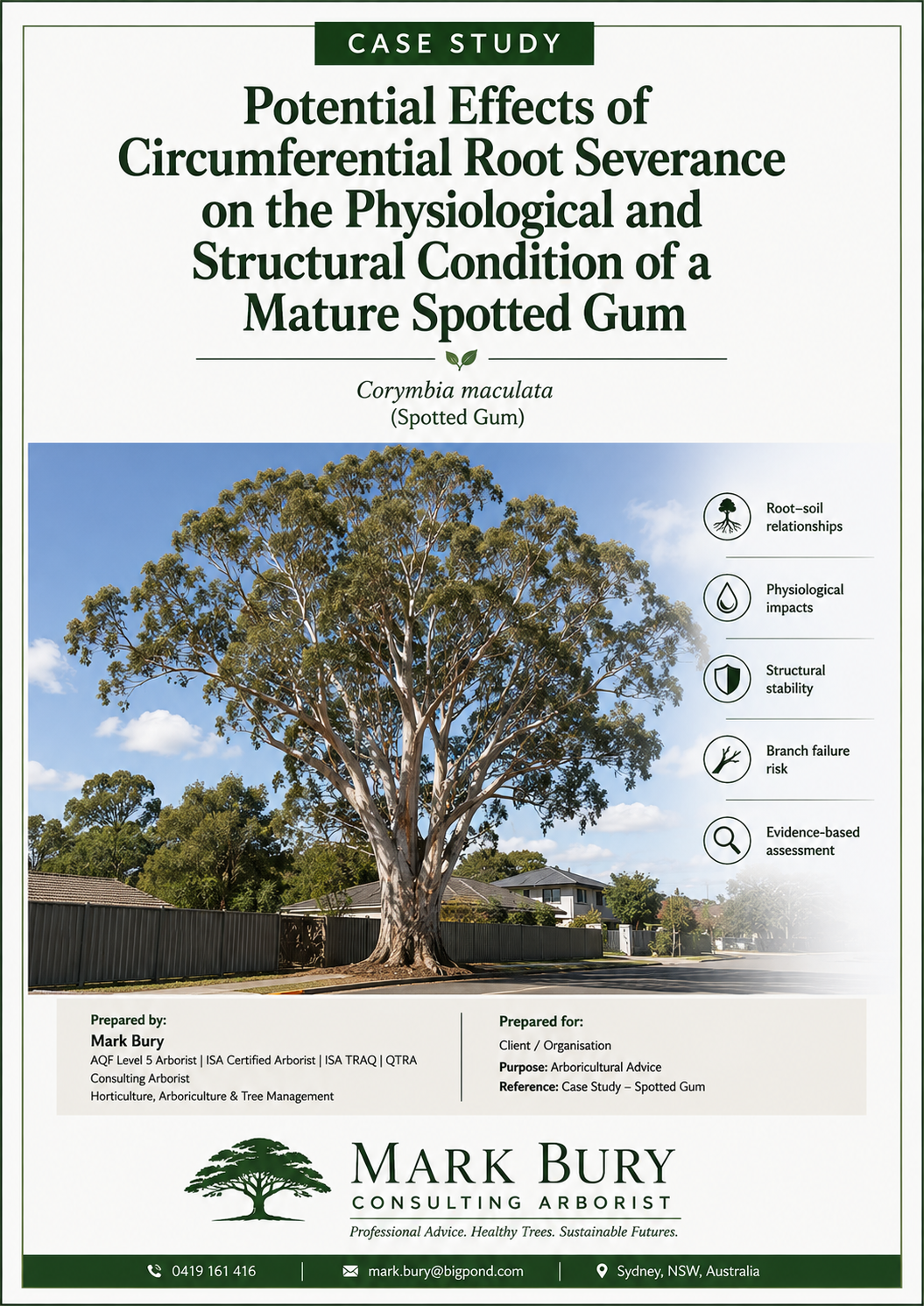
This article presents an arboricultural case study examining the potential physiological and structural consequences of extensive circumferential root severance on a mature Corymbia maculata (Spotted Gum). The case study focuses on how substantial disturbance to the root system may affect a tree even where the crown continues to appear healthy immediately following the damage.
The article explores the important relationship between roots, soil, water uptake, mineral nutrition, carbohydrate storage and crown function. Severance of roots around a significant proportion of the tree's circumference may reduce the functional root system and disrupt the movement of water and nutrients between the soil and canopy. These effects may not become immediately apparent, particularly in a mature tree with stored carbohydrate reserves and access to favourable soil moisture.
The article also examines structural stability. Large woody roots close to the trunk contribute significantly to anchorage and resistance to wind loading. Circumferential root severance may therefore affect the integrity of the root plate even where foliage density, colour and shoot growth initially remain relatively normal.
A central theme of the case study is the potential for a time lag between root damage and observable crown symptoms. Decline may develop progressively over months or years as remaining roots become unable to meet physiological demands or decay develops within severed root tissues.
The case study ultimately demonstrates why assessment following major root disturbance must consider both physiological viability and structural stability, rather than relying solely upon the visible condition of the canopy.