

WEATHER AND TREE MANAGEMENT IN THE GREATER SYDNEY AREA
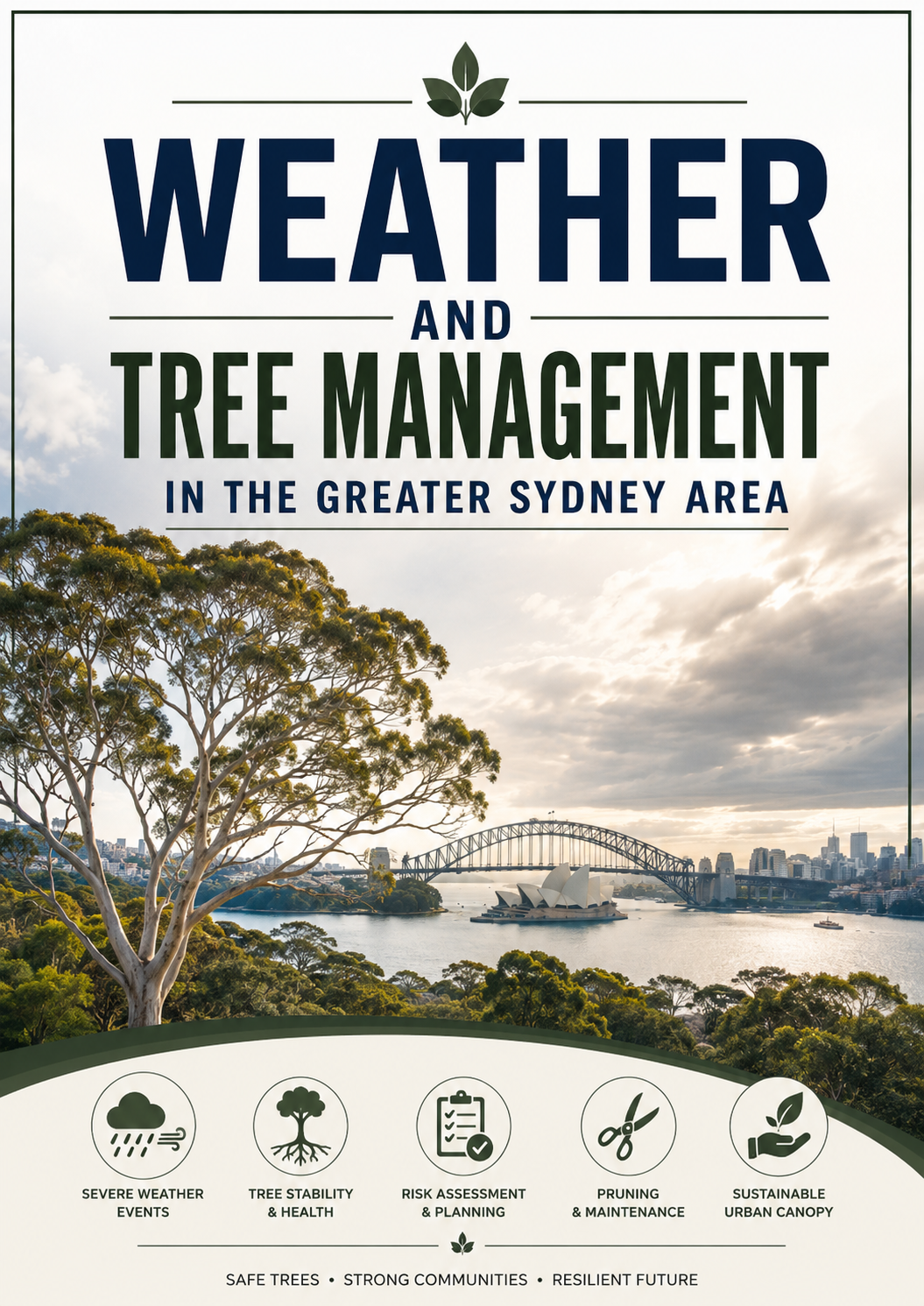
Weather and Tree Management in the Greater Sydney Area examines the increasingly important relationship between severe weather, tree condition, species characteristics and the management of Sydney’s urban forest.
Greater Sydney experiences a complex range of weather events including severe thunderstorms, damaging winds, east coast lows, intense rainfall, drought, heatwaves and periods of prolonged soil saturation. Severe thunderstorms may generate winds exceeding 90 km/h, while heavy rainfall can substantially alter soil conditions and tree stability.
The article considers how these conditions influence branch failure, stem failure and whole-tree windthrow, recognising that tree failure rarely results from weather alone. Risk commonly reflects an interaction between wind loading, soil saturation, root architecture, structural defects, previous pruning, restricted rooting environments, declining vitality and the inherent characteristics of individual species.
Particular attention is given to commonly encountered Greater Sydney trees, including Corymbia maculata, Corymbia citriodora, Eucalyptus nicholii and other eucalypts that may develop large crowns, substantial branch structures or species-specific failure characteristics requiring consideration during assessment.
The article promotes a risk-based and evidence-based approach to tree management rather than unnecessary removal following storms. Pre-storm inspections, Visual Tree Assessment, appropriate risk-assessment methodologies, monitoring, targeted pruning and post-storm reassessment can assist managers in identifying foreseeable hazards while retaining valuable trees wherever reasonably practicable.
Effective weather-related tree management ultimately requires balancing public safety, tree retention, urban canopy, biodiversity and asset protection. This is particularly important in Greater Sydney, where urban tree canopy represents significant green infrastructure and provides environmental, climatic and community benefits.