

Intermittent Explosive Disorder and the Workplace
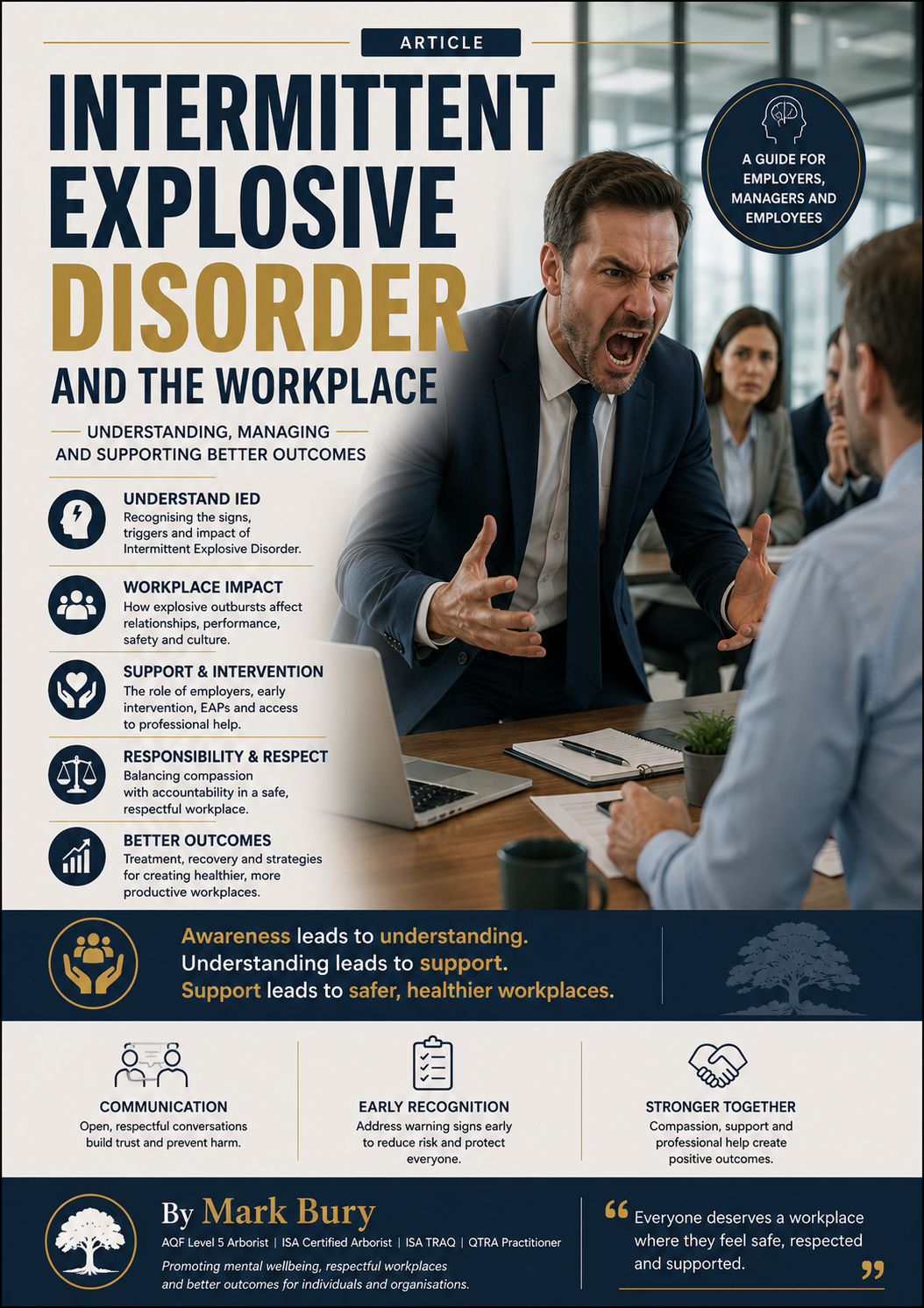
Intermittent Explosive Disorder and the Workplace examines how Intermittent Explosive Disorder (IED) can affect behaviour, relationships and workplace performance. IED is characterised by recurrent episodes of impulsive, disproportionate anger that are significantly more intense than the situation warrants. These outbursts may involve verbal aggression, threats or, in some cases, physical aggression, often followed by remorse, embarrassment or distress.
The article explains how IED can disrupt teamwork, damage professional relationships, reduce productivity and create safety concerns in workplaces where cooperation, communication and sound judgement are essential. It also explores the impact on colleagues, supervisors and organisational culture, highlighting the importance of recognising concerning patterns of behaviour rather than viewing repeated explosive reactions as simply a personality trait.
Emphasis is placed on the role of employers in fostering respectful, psychologically safe workplaces through clear behavioural expectations, appropriate conflict-resolution processes, employee assistance programs and early intervention where appropriate. The article also discusses the importance of confidential support, reasonable workplace adjustments when suitable, and referral to qualified mental health professionals for assessment and treatment.
Importantly, the article distinguishes between occasional frustration—a normal part of working life—and persistent, uncontrolled aggressive outbursts that may indicate an underlying mental health condition. It reinforces that a diagnosis should only be made by appropriately qualified health professionals and that effective treatments, including psychological therapies and, in some cases, medication, are available.
Ultimately, the article encourages greater understanding, reduced stigma and evidence-based management, promoting safer, healthier and more supportive workplaces for employees while balancing compassion with accountability and professional responsibility.